Over 200 kilometres of coast and a dozen very different resorts: here is how to pick the one that fits your holiday
Anyone planning a first holiday on the Costa Blanca ends up asking the same thing: Benidorm or Jávea? Altea or Calpe? North or south? The Alicante coastline is long, and its resorts are far more different from each other than the brochures suggest, from high-rise skyline and nightlife to whitewashed villages with coves where you can hear the sea over breakfast. This guide runs north to south with a British and Irish traveller in mind: how you get there, what the beach is like, how quiet it is and who it suits.
Dénia: old town, harbour and food
The northernmost resort sits between the Montgó Natural Park and the sea, with a castle above the old town, a busy harbour with ferries to Ibiza and Mallorca, and a food scene that earned Dénia the title of UNESCO Creative City of Gastronomy. Long sandy beaches to the north (Les Marines), rocky coves to the south (Les Rotes). Suits couples and families who want a real town that lives all year. Reach it from Valencia or Alicante airports, about an hour from either.
Jávea: three towns in one
Jávea (Xàbia) is made up of the old town on the hill, the port district and the Arenal, the sandy beach with its promenade. In between are the coves around the Cabo de la Nao and the Granadella, some of the most beautiful on the coast. Green, villa-filled, quiet and upmarket, with a large international community. Ideal for families with a car and for anyone combining beach with walking on the Montgó.
Moraira: small, quiet, polished
The smallest place on this list is a former fishing village with a fort on the beach, a marina and coves such as El Portet. No nightlife and no high-rises, but good restaurants, seafront walks and peace. For couples and families who want exactly that, and for longer stays.
Calpe: the rock and the families
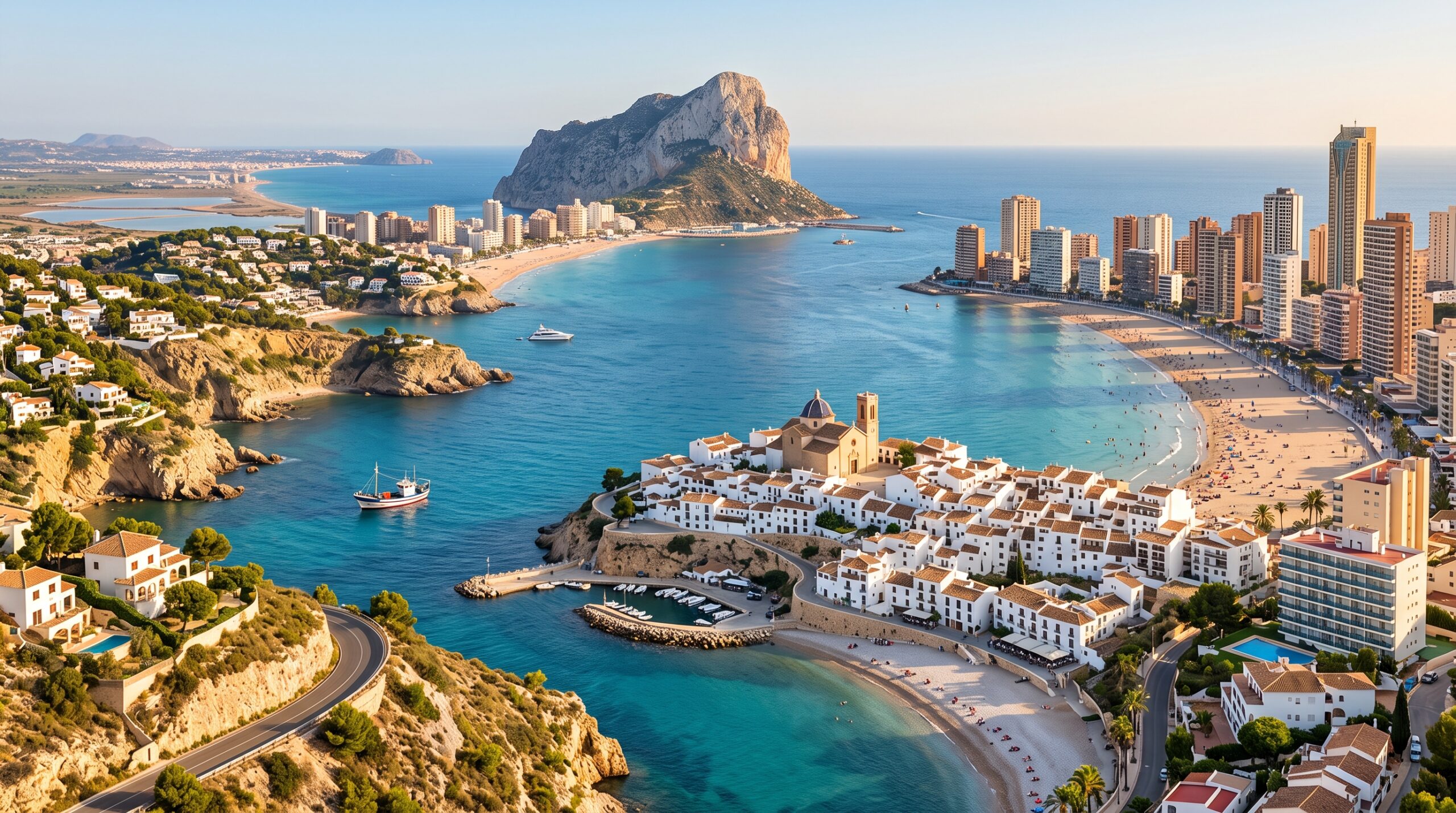
Calpe is unmistakable thanks to the Peñón de Ifach, the 332-metre rock that divides its two main beaches. Wide sand, a promenade, plenty of sea-view apartments and an old town that most people miss. Good value and everything within walking distance: for families with young children, one of the most practical resorts on the coast.
Altea: the prettiest village
With its whitewashed old town, cobbled lanes and the church with the blue-tiled domes, Altea is generally considered the prettiest place on the Costa Blanca. The beach is pebbles rather than sand, but the water is very clear. Art, galleries, good restaurants and little fuss. For couples and for anyone who values atmosphere over a sandy beach.
Benidorm: everything, all the time, for everyone
Benidorm divides opinion: a skyline like nowhere else in Spain, two long sandy beaches (Levante and Poniente) with promenades, theme parks such as Terra Mítica, serious nightlife and an infrastructure that runs twelve months a year. If you want quiet, look elsewhere; if you want entertainment, accessibility, restaurants for every taste and a beach on your doorstep, there is nowhere more practical. Right next door is the Serra Gelada Natural Park for walking, and Albir and La Nucía are calmer alternatives a few minutes away.
Villajoyosa and Alicante: colour and city
Villajoyosa, with its brightly painted fishermen's houses and chocolate-making tradition, is a good pick for a real town by the beach between Benidorm and Alicante. Alicante itself is a city to enjoy: Santa Bárbara castle, the old town, the Explanada promenade and the Postiguet city beach, with the TRAM light rail running along the coast to Benidorm and on to Dénia. For a city break with a beach, or as a base without a car.
The south: Santa Pola, Guardamar, Torrevieja
South of Alicante the coast flattens out and the beaches get longer: Santa Pola with its boat to Tabarca island, Guardamar with its pine-covered dunes, and Torrevieja with its pink salt lagoons and one of the largest British communities in Spain. Rentals here are often cheaper, winters are especially mild and the area is set up for longer stays. Alicante-Elche airport is 30 to 45 minutes away.
In short
For entertainment and infrastructure: Benidorm. For families, sand and everything on foot: Calpe or Jávea. For quiet and atmosphere: Altea or Moraira. For food and a town that lives all year: Dénia. For winter sun and value: the south around Torrevieja. For a city with a beach: Alicante.
Where to stay: book legal, wherever you go
All along the Costa Blanca, the holiday rental is the most common type of accommodation and the choice is huge. Legal holiday rentals in the Region of Valencia carry an official registration number (format VT-XXXXX-A in Alicante province) that must appear in the listing; checking it takes a minute and avoids nasty surprises. ApturCV, the leading holiday-rental association in the Region of Valencia, explains how in its traveller guide.
Frequently asked questions
Which airport is best for the Costa Blanca?
Alicante-Elche for the whole coast; for Dénia and Jávea, Valencia is about the same distance. Both have direct flights from airports across the UK and Ireland.
Do you need a car on the Costa Blanca?
Not necessarily in Benidorm, Alicante or along the TRAM line. For Jávea, Moraira, the coves and the inland villages, a car makes a big difference.
When is the best time to go?
May, June and September to October: warm, swimmable and less crowded than high summer. Winter is mild and ideal for walking, cycling and longer stays.
Travel with confidence: choose a legal holiday rental with a registration number. We explain how to spot one in
our guide to legal holiday rentals.