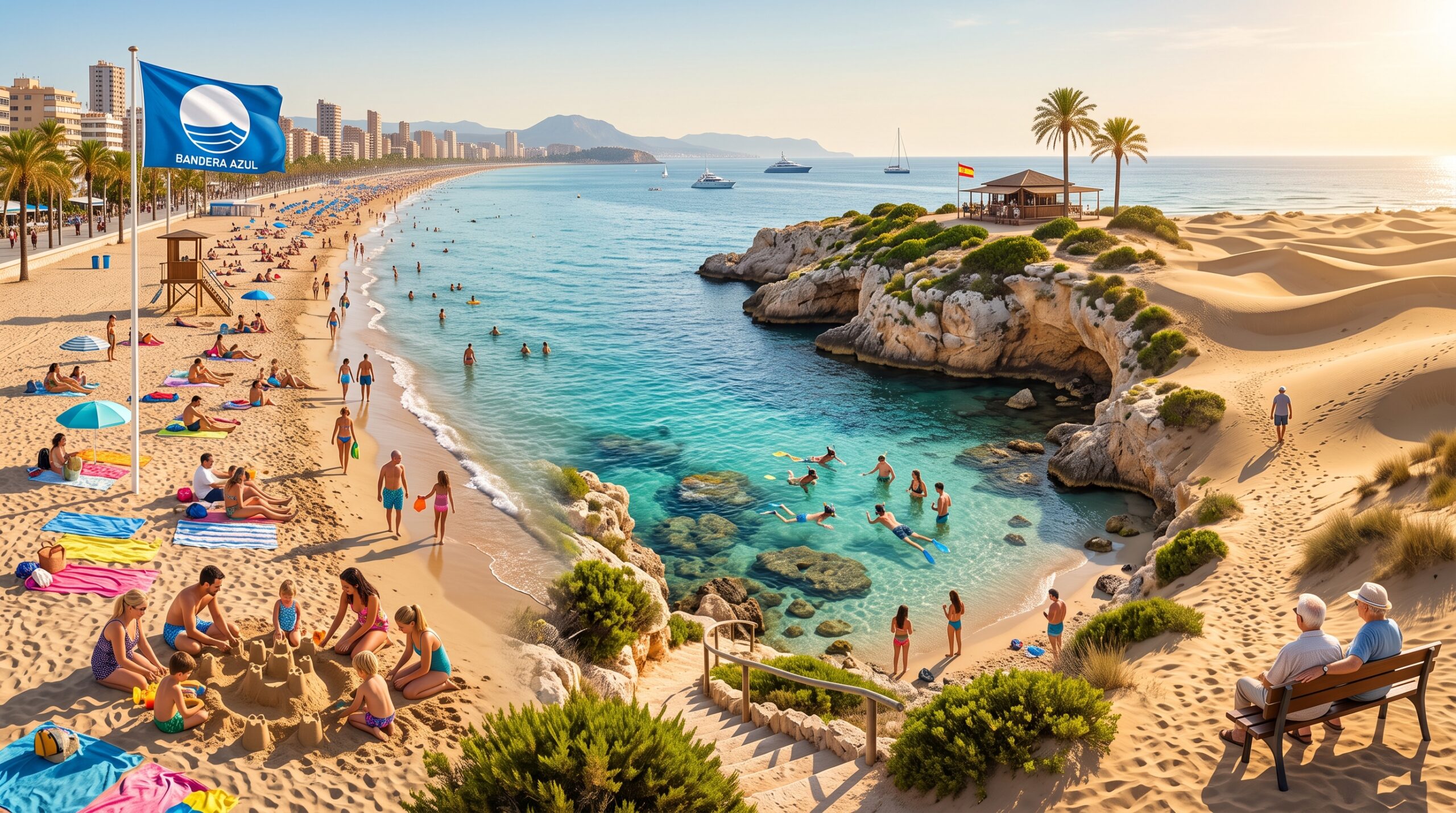
With 152 Blue Flag beaches in 2026, more than any other region in Spain, the hard part is not finding a good beach but choosing one
June is the best beach month of the year in the Region of Valencia: the sea is already above 21°C, the days are the longest, and the sand is not yet as busy as in July and August. In 2026 the region again tops the Spanish Blue Flag rankings, with 152 flagged beaches across 48 municipalities. This guide runs down the coast from north to south by what you are after: sand for families, coves for swimming, dunes for switching off, or a promenade so you never have to leave town.
Castellón: the Costa del Azahar
Peñíscola has two very different beaches: the Norte, kilometres long with views of the castle, and the Sur, small and sheltered by the harbour. Benicàssim strings together five town beaches with a promenade (Voramar, Almadraba, Torre de Sant Vicent, Heliópolis and Els Terrers), all with facilities and a family feel. For coves, the Serra d'Irta between Alcossebre and Peñíscola is the reference: undeveloped, with sand, rock and crystal-clear water. In Oropesa, La Concha is the classic sheltered, quiet beach.
Valencia: long sands and dunes
Valencia city has a proper urban beach: Malvarrosa and Cabanyal, with a promenade, rice restaurants and a tram from the centre. To the south, inside the Albufera Natural Park, El Saler and the Devesa offer kilometres of sand backed by dunes and pine woods with no buildings on the front: the most natural beach within reach of the capital. Further south, Cullera (Sant Antoni beach and its lighthouse), Gandia (the wide Nord beach with promenade) and Oliva (dunes, less built-up) are the Valencian summer classics for families.
Northern Costa Blanca: coves and clear water
Between Dénia and Benidorm is the stretch with the most coves in the region. The Granadella in Jávea appears every year among the best coves in Spain: small, pebbly, turquoise, and worth arriving early for. Also in Jávea, the Arenal is the sandy option for families and the Portitxol is the postcard. Moraira has El Portet, sheltered and calm; Calpe has the Arenal-Bol and La Fossa beaches at the foot of the Peñón de Ifach; Altea has a pebble beach with very clean water; and Dénia has Les Marines (sand) and Les Rotes (rock and snorkelling).
Benidorm and Alicante: city beaches with every facility
Benidorm has two of the best-equipped urban beaches in Spain: Levante, lively and with a promenade, and Poniente, longer and more family-oriented. Alicante offers the Postiguet right in the centre and San Juan beach, seven kilometres of sand with a tram from the city. In El Campello and Villajoyosa you get town beaches with fewer people.
Southern Costa Blanca: dunes, salt lagoons and Tabarca
South of Alicante, Guardamar del Segura is the big surprise: very long beaches protected by dunes and pine forest, with no buildings behind. Santa Pola has family beaches and the boat to Tabarca island, a marine reserve where snorkelling is a must. Torrevieja combines La Mata (long and natural) with its town beaches, and Orihuela Costa has small coves such as Cala Capitán and Cabo Roig.
Tips for June
On the night of 23 June, St John's Eve, the beaches fill with bonfires and people until dawn, and in Alicante the Hogueras de San Juan (20 to 24 June, a festival of international tourist interest) turn the whole city into a party. If you want peace, pick another date or beaches away from the main towns. Many Blue Flag beaches have lifeguards from mid-June; coves almost never do, worth bearing in mind with children.
Where to stay near the beach
On the coast, the holiday rental is the usual summer accommodation, and it is exactly where it pays to look closely at what you book. Legal holiday rentals in the Region of Valencia carry an official registration number (format VT-XXXXX-V, -A or -CS) that must appear in the listing; checking it before you pay takes a minute. ApturCV, the leading holiday-rental association in the Region of Valencia, explains how in its traveller guide.
Frequently asked questions
What is the most beautiful beach in the Region of Valencia?
A matter of taste, but the Granadella (Jávea) usually tops the lists of coves, and El Saler or Guardamar the lists of natural sandy beaches.
How warm is the sea in June?
Around 21 to 22°C at the start of the month and a little more by the end; in July and August it is above 25°C.
How many Blue Flags does the Region of Valencia have in 2026?
152 beaches in 48 municipalities, the highest number in Spain this year.
Travel with confidence: choose a legal holiday rental with a registration number. We explain how to spot one in
our guide to legal holiday rentals.