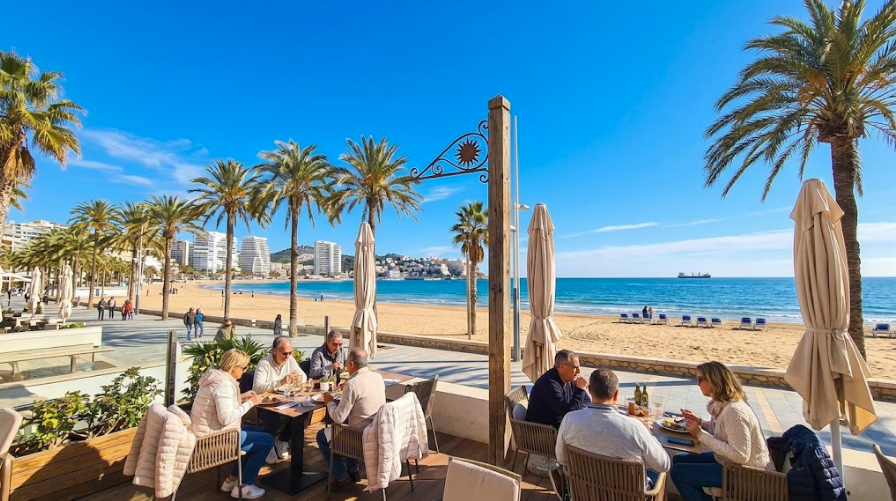
Two and a half hours from the UK, a January where lunch is outside and the sky is blue
January gets a bad press as a month to travel. Christmas is over, the weather at home is grim and the sofa wins. But it is one of the best months to visit the Region of Valencia: fewer crowds, lower prices, a city you can wander without queuing, and weather that lets you eat outside in the middle of winter. With direct flights to Valencia and Alicante from airports across the UK and Ireland, it is also one of the easiest winter-sun breaks in Europe.
What is the weather like in Valencia in winter?
On the coast, daytime highs in January are typically around 16 to 17°C in Valencia, often a touch higher in Alicante, and many days are completely clear. Nights are cool, around 6 to 8°C, so pack a jacket, but in the sun a jumper is usually enough by day. Rain is rare and short-lived. Inland, in the mountains of Castellón and Alicante, it is proper winter, with occasional snow on the peaks, so you can combine a seafront walk in the morning with a mountain village in the afternoon.
Valencia city: culture without the queues
Spain's third-largest city is at its most relaxed in winter. The old town is made for walking: La Lonja, the 15th-century silk exchange and a UNESCO World Heritage Site; the cathedral and its Miguelete tower; the Serranos and Quart gates; and the Mercado Central, one of Europe's finest covered markets and a great spot for lunch. The Turia Gardens, the old riverbed turned into a nine-kilometre park, take you on foot or by bike to the City of Arts and Sciences, where the Oceanogràfic aquarium and the Science Museum are ideal for families on a cooler day.
Two dates worth knowing: on 5 January the Three Kings parade fills the city centre, and from late February Valencia starts building up to Las Fallas in March. Come in January and you get the city at its calmest.
The sea is never far away either. A stroll along Malvarrosa beach in the afternoon light, followed by a rice dish at one of the seafront restaurants, is the classic Valencian winter day.
Costa Blanca: the mildest winter in mainland Spain
Alicante province has the warmest winters on the Spanish mainland. Benidorm, Altea, Calpe, Jávea and Dénia keep their promenades and café terraces busy right through January in a way few other European resorts can. It is the favourite season for walkers heading into the Serra Gelada Natural Park between Benidorm and Albir, or up the Peñón de Ifach in Calpe without the summer heat, and for cyclists on the coast roads and inland climbs such as the Coll de Rates, where professional teams train through the winter.
Inland, Guadalest, with its castle perched above a turquoise reservoir, and the Vall de Gallinera valley make an easy day trip. From late January into February the almond trees blossom and the inland valleys turn white and pink, one of the loveliest sights of the Valencian winter. In Elche, the Palmeral, Europe's largest palm grove and another UNESCO site, is at its most pleasant in the cooler months.
Castellón: quiet coast and mountain towns
The north of the region is still little known to British visitors, and winter suits it well. Peñíscola, with its Templar castle on a rock above the sea, is packed in summer and almost empty in January. Morella, a walled town in the mountains, is a proper winter destination: open fires, hearty food and, with luck, snow in the streets. In between, Benicàssim and the Desert de les Palmes Natural Park offer walking trails with sea views, and the hot springs at Montanejos are the perfect plan for a chilly day.
What to eat in winter
Valencian winter cooking is less famous than paella but every bit as good: arroz al horno (oven-baked rice), puchero (a slow-cooked stew), olleta from Alicante, and all i pebre, an eel dish from the Albufera lagoon, with wines from Utiel-Requena or Alicante alongside. Around 17 January many villages celebrate Sant Antoni with bonfires, the blessing of animals and traditional sweets.
Where to stay
For a winter break, a holiday rental makes a lot of sense: your own kitchen for lazy days, room for the family and, in low season, often good prices, especially for longer stays. In the Region of Valencia, legal holiday rentals carry an official registration number (format VT-XXXXX-V, -A or -CS) that must appear in the listing. Checking it before you book takes a minute and means you are booking with an identifiable operator. ApturCV, the leading holiday-rental association in the Region of Valencia, explains how in its traveller guide.
Frequently asked questions
Can you swim in Valencia in January?
Walk on the beach, eat by the sea and catch some sun: absolutely. Swimming is for the brave, as the water is cold at this time of year, although you will always spot a few hardy locals on a sunny day.
City or coast for a long weekend?
Valencia for a cultural, foodie city break; the Costa Blanca for the mildest weather and outdoor activities; inland Castellón for mountains and peace and quiet.
Does it snow in the Region of Valencia?
Yes, inland: Els Ports and the Maestrat (Castellón), the Sierra de Aitana (Alicante) and the Rincón de Ademuz (Valencia) see snow on a few days each year. It is not a ski destination, but it does have real winter scenery.
Travel with confidence: choose a legal holiday rental with a registration number. We explain how to spot one in
our guide to legal holiday rentals.