Mon-Sat: 8.00-10.30,Sun: 8.00-4.00
Las Fallas 2026: a first-timer’s guide to Valencia’s festival of fire
Home » Valencia  »  Las Fallas 2026: a first-timer’s guide to Valencia’s festival of fire
Las Fallas 2026: a first-timer’s guide to Valencia’s festival of fire
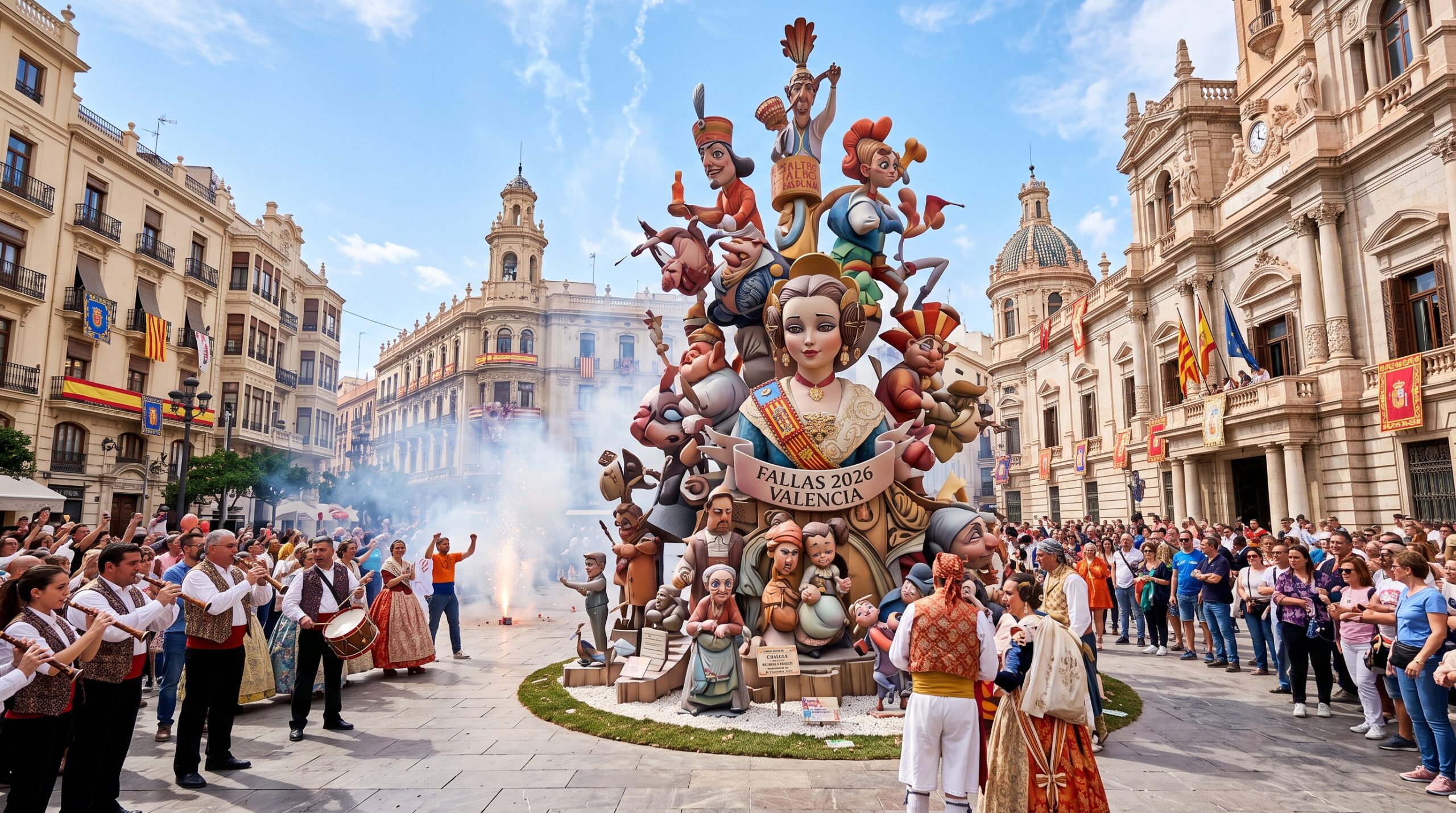
For nineteen days in March, Valencia fills with gunpowder, brass bands and giant sculptures that end up in flames. Here is how to plan it Las Fallas is Valencia's biggest festival and one of the strangest and best in Europe. For almost three weeks the city puts up hundreds of huge sculptures made of wood and papier-mâché, the ninots, which are admired, argued over and, on the night of 19 March, set on fire. Since 2016 the festival has been on UNESCO's list of Intangible Cultural Heritage. If you are coming from the UK or Ireland for the first time, this guide gives you the official 2026 programme and the tips that actually matter.

Key dates for Las Fallas 2026

The programme is almost identical every year, so it works for planning future trips too. The official dates for 2026:
  • 22 February, the Crida. At 7.30 pm at the Torres de Serranos, the Fallera Mayor officially opens the festival.
  • 1 to 19 March, daily mascletà. Every day at 2 pm in the Plaza del Ayuntamiento: a few minutes of choreographed firecrackers that you feel in your chest rather than watch. The first time is astonishing.
  • 15 and 16 March, the plantà. The children's fallas must be up by the morning of the 15th and the main ones by early on the 16th. From then on the sculptures are in the streets.
  • 17 and 18 March, the Ofrenda. Thousands of falleras and falleros in traditional dress parade from 3.30 pm to the Plaza de la Virgen, building a giant cloak of flowers for the city's patron saint. The most moving part of the festival.
  • 18 March, the Nit del Foc. At midnight, the biggest fireworks display of the festival by the Monteolivete bridge. There are also fireworks on 6, 7, 16 and 17 March.
  • 19 March, the Cremà. The children's fallas burn at 8 pm, the main ones at 10 pm, and the city's own falla closes the festival at 11 pm.

What to see and how to organise your days

The mascletà is a must at least once. Get to the Plaza del Ayuntamiento well before 2 pm, because it fills up, and be ready for the noise: with small children, stand in the side streets or bring ear defenders. The sculptures are spread across the whole city. The top-category ones, the Sección Especial, are concentrated in districts such as Ruzafa, El Pilar, Convento Jerusalén and around the City of Arts and Sciences. Plan a walking route and then let yourself wander; in the weeks before the festival, the Exposición del Ninot shows the figures that will be saved from the flames. Once the fallas are up, the city changes: closed streets, neighbourhood street parties every night, churros with hot chocolate at all hours and firecrackers from early morning. It is loud and crowded by design. If you want peace and quiet, stay outside the centre or come in the first week of March, when the daily mascletà is already on but the sculptures are not yet in place.

Getting there and getting around

There are direct flights to Valencia from airports across the UK and Ireland, though fares rise in Fallas week, and the metro links the airport to the city centre in about 25 minutes. Once there, walk: the centre is closed to traffic on the main days and the metro and buses are packed. If you hire a car, keep it out of the centre and park on the outskirts or at your accommodation.

Where to stay: book early and check it is legal

Fallas is the busiest week of the year in Valencia. Accommodation sells out months ahead, prices go up, and this is exactly when last-minute listings appear that deserve a careful look. A legal holiday rental in the Region of Valencia carries an official registration number (format VT-XXXXX-V) that must appear in the listing; if you cannot see it, ask before you pay. ApturCV, the leading holiday-rental association in the Region of Valencia, explains how to check it in its traveller guide. If the centre is full, districts such as Benimaclet, El Cabanyal and the beach area are well connected and have their own atmosphere, and the towns around the city with a direct metro line are a sensible alternative.

Frequently asked questions

When is the best time to go, the start or the end?

The big days are 15 to 19 March, with the sculptures up and all the main events. The first half of the month is calmer: daily mascletà, but no fallas in the streets yet.

Is Las Fallas suitable for children?

Yes. The children's fallas and the Ofrenda are big hits with kids. The noise of the mascletà and the firecrackers is the thing to manage: ear protection and a bit of distance.

What is celebrated on 19 March?

St Joseph's Day, the patron saint of carpenters, which is where the tradition of burning off-cuts of wood at the end of winter comes from. That night's Cremà closes the festival. Travel with confidence: choose a legal holiday rental with a registration number. We explain how to spot one in our guide to legal holiday rentals.

Deja una respuesta

Tu dirección de correo electrónico no será publicada. Los campos obligatorios están marcados con *